
There is no single security solution that works for every property.
Some businesses benefit from having a security officer stationed at a specific entrance or location. Others may need regular patrols across a larger property or multiple locations.
Understanding the difference between roving patrol services and stationary security can help property managers make a more informed decision.
What Are Stationary Security Guards?
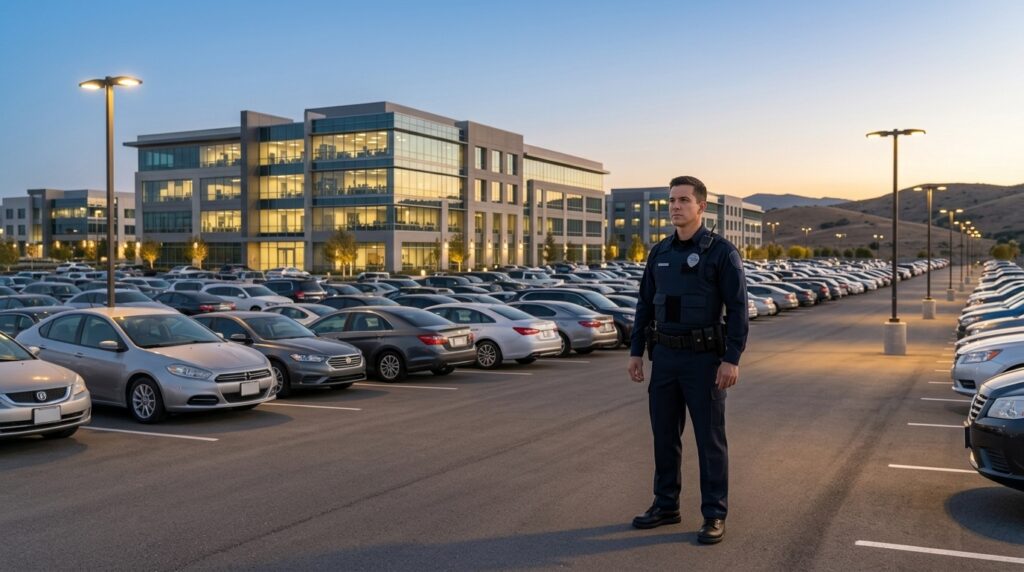
Stationary security guards remain at a designated post for a defined period.
This can be useful when a property has a specific location that requires continuous security attention.
Examples can include:
- Building entrances
- Front desks
- Access points
- Commercial facilities
- Construction entrances
- Retail locations
What Are Roving Patrol Services?
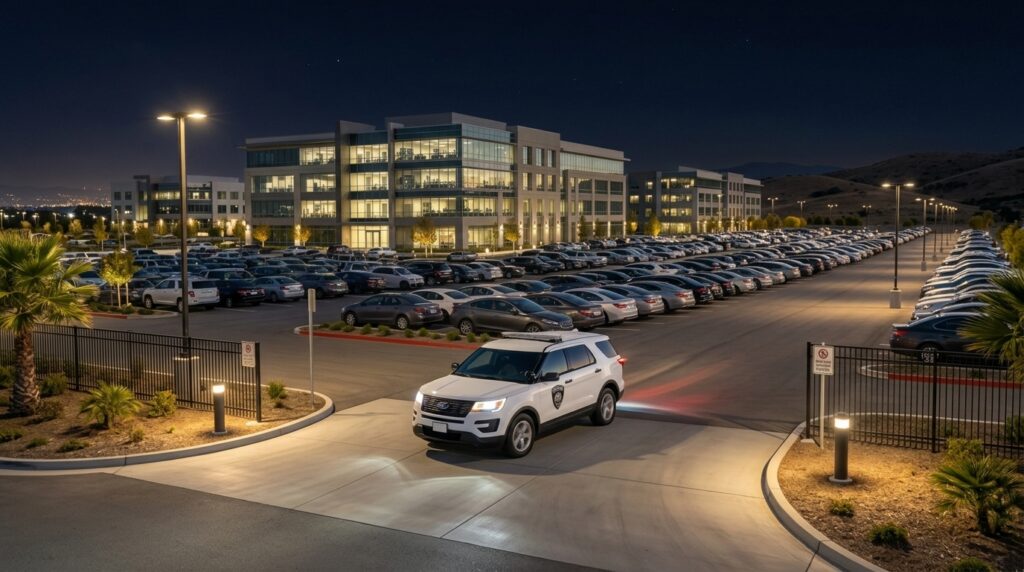
Roving patrol involves security personnel moving through designated areas or traveling between locations according to an established patrol schedule.
Rather than remaining at one post, patrol officers conduct security checks across the property or assigned route.
When Stationary Security May Make Sense
Stationary security can be useful when continuous attention is required at one specific location.
For example, a commercial building may need an officer at its main entrance to manage access and monitor visitors throughout operating hours.
A construction project may also require an officer at a designated entrance.
When Roving Patrol May Be More Appropriate
Roving patrol can be useful for larger properties where security attention is needed across multiple areas.
It may also be suitable for businesses that do not require a continuously stationed officer but still want regular security checks.
Coverage Across Multiple Locations
One advantage of roving patrol services is flexibility.
Property managers with multiple nearby locations may be able to structure patrol routes around several properties, depending on the size, location, schedule, and specific requirements of the assignment.
After-Hours Security
Roving patrols can be particularly useful for properties that become quieter after normal business hours.
Scheduled patrols can provide a visible security presence and allow designated areas to be checked during evenings, overnight periods, weekends, or other scheduled times.
Which Option Is Better?
The answer depends on the property.
A business that requires constant access monitoring may benefit more from a stationary officer.
A large commercial property with multiple areas may benefit from roving patrols.
Some businesses may even benefit from combining both approaches.
Combining Roving Patrol and Stationary Security
Security services do not always have to be an either-or decision.
For example, a large commercial property could have a security officer at the main entrance while roving patrol personnel conduct scheduled checks of parking areas, perimeter areas, and secondary locations.
The right combination depends on the property’s security priorities.
Consider Your Property Before Choosing
Before selecting a security model, consider:
- Property size
- Number of entrances
- Operating hours
- Number of locations
- Security history
- Parking and perimeter areas
- After-hours activity
- Employee and visitor traffic
These factors can help determine whether stationary security, roving patrol, or a combination of services makes sense.
Final Thoughts
Roving patrol services and stationary security guards each have an important role in property protection.
For California businesses and property managers, the best approach is the one that reflects the property’s actual layout, operating environment, security concerns, and schedule.
American Guard Protection can provide flexible security solutions designed around the specific needs of your property.